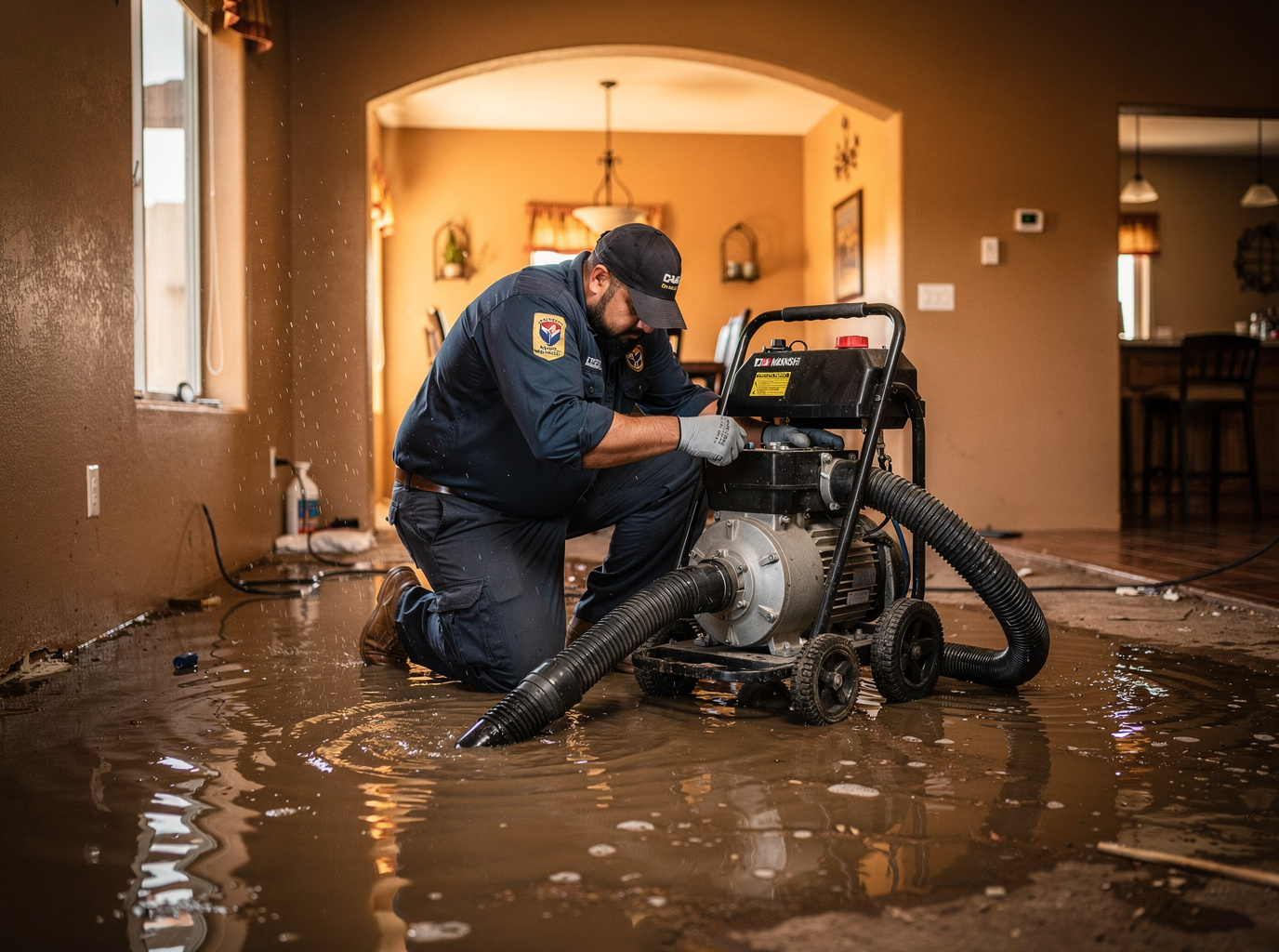
In Albuquerque's high desert climate, sudden monsoon downpours or pipe failures in Northeast Heights ranch homes often send water under slab foundations and into stucco walls. Older adobe and plaster construction common in Barelas and Old Town lets moisture travel farther than in newer drywall builds, so extraction crews must pull baseboards and use moisture meters on every wall within the first hour to avoid hidden saturation that later grows mold.
University Heights and South Valley properties sit on varying soil types that drain differently after heavy rain, changing how quickly standing water must be removed before it migrates into neighboring units. Technicians map the flow path from the source, often through shared irrigation ditches or low-lying lots near the North Valley, then stage truck-mounted pumps and air movers sized for the square footage and ceiling height typical of these neighborhoods.
Downtown and Uptown commercial buildings frequently have below-grade mechanical rooms where water from roof drains or water heaters collects against concrete. Removing it requires submersible pumps and containment barriers to protect adjacent retail spaces; crews also document every step for Bernalillo County insurance adjusters who routinely inspect claims from flash flooding near the Rio Grande corridor.
Los Ranchos and North Valley homes with older galvanized plumbing see repeated pinhole leaks that saturate hardwood floors and subfloors. Extraction here includes lifting sections of flooring for direct drying underneath, because the dry local air alone is not enough once water has wicked into multiple layers.
Technician insight
In Albuquerque the thing that catches most people out with Emergency Water Removal is how fast water travels under the slab in Northeast Heights homes built on caliche soil; once it reaches the vapor barrier you have to pull baseboards on every exterior wall or the moisture just sits there through our mild winters and shows up as musty smells months later.
Northeast Heights Slab Leak
Water from a pinhole in a supply line spread under the slab and into two bedrooms. Crews mapped saturation through the tile, extracted standing water, and placed drying equipment under lifted sections of flooring. Follow-up visits confirmed moisture levels dropped below 12 percent before walls were closed.
Emergency Water Removal Services We Offer
✓Burst Pipe Water Extraction
Locate and isolate the leak then remove standing water from floors and walls before it reaches neighboring units in multi-family buildings common in Nob Hill.
✓Flooded Basement Removal
Pump out below-grade spaces in South Valley and Northeast Heights homes where monsoon runoff collects against foundations and threatens electrical systems.
✓Appliance Leak Extraction
Contain and extract water from failed water heaters or washing machines in Uptown condos and University Heights rentals to limit damage to shared flooring.
✓Roof Drain Backup Removal
Clear water from commercial flat-roof overflows in Downtown and Old Town buildings before it migrates into tenant spaces below.
✓Crawl Space Water Removal
Extract pooled water under North Valley and Los Ranchos homes where high desert evaporation can leave hidden moisture that later affects joists.
Emergency Water Removal Cost in Albuquerque, NM
| Service | Typical Range | What Affects It |
|---|---|---|
| Single Room Extraction | $350–$650 | Higher when water reaches under hardwood or into wall cavities in older Barelas homes. |
| Whole Basement Pump-Out | $800–$1,600 | Varies with depth and whether silt from South Valley irrigation ditches is present. |
| Multi-Room Apartment Extraction | $600–$1,200 | Lower per unit when shared walls limit spread in Nob Hill buildings. |
| Crawl Space Drying Setup | $400–$750 | Includes equipment rental for the typical 48–72 hour drying cycle in dry Albuquerque air. |
Ranges are typical for Albuquerque, NM and confirmed with an exact written quote before any work starts.
How it works
- 1
Arrival And Safety Assessment
Technician arrives within the service window, shuts off water source if accessible, and checks for electrical hazards before any extraction begins.
- 2
Water Mapping And Containment
Moisture meters trace the full extent of saturation through walls and floors, then barriers are placed to prevent spread into unaffected rooms.
- 3
Extraction And Initial Drying
Truck-mounted and portable pumps remove standing water, followed by air movers and dehumidifiers sized for the home's construction type.
- 4
Documentation And Handover
Photos and moisture readings are recorded for insurance, then the property is left with drying equipment running and a scheduled follow-up visit.
Pricing
Cost depends on water volume, access difficulty, and how many rooms are affected; upfront quotes are provided after the initial assessment.