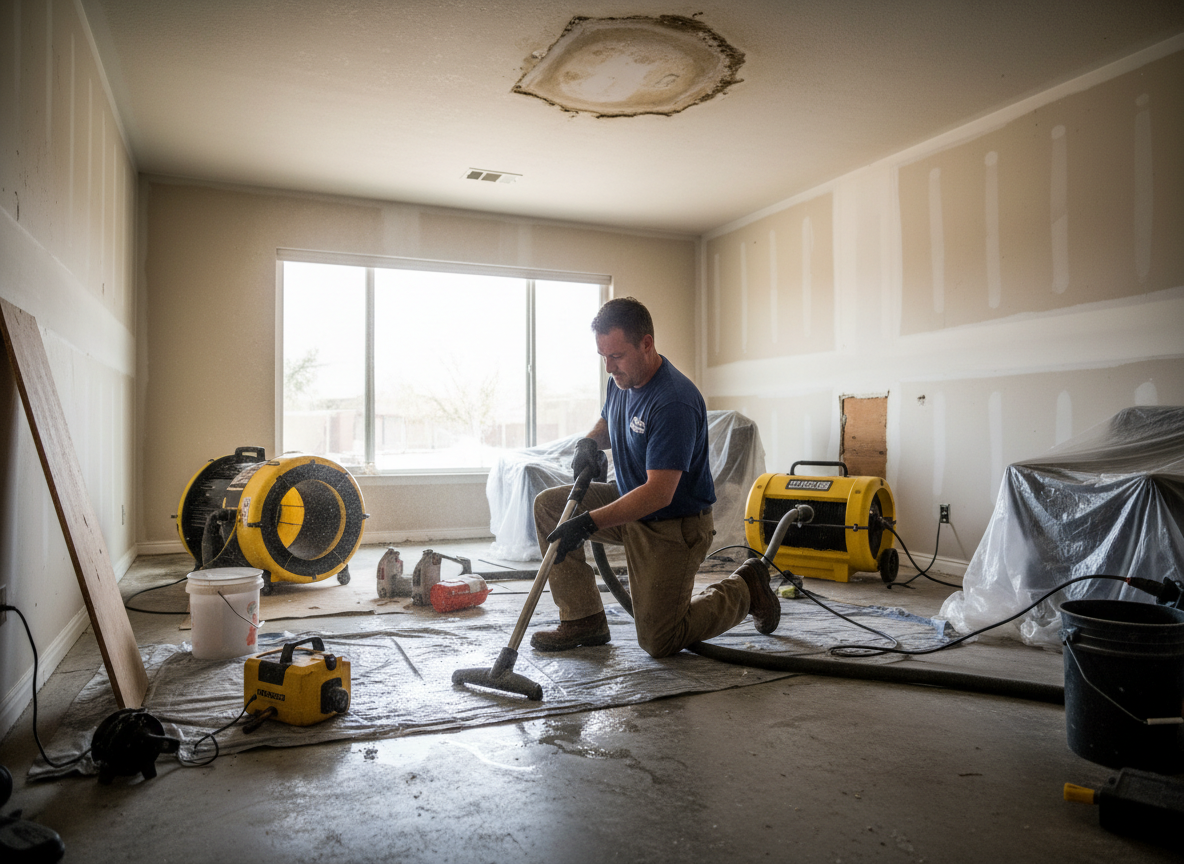
Albuquerque's high desert climate brings sudden monsoon bursts and occasional winter pipe bursts that hit older housing stock hardest. Homes in Old Town, Barelas and University Heights often feature adobe or early wood-frame construction with limited crawl spaces, so water travels under floors and into walls faster than in newer builds. Technicians must map moisture with infrared tools before any drying begins because trapped water in these materials leads to hidden mold within days even when surface air feels dry.
Northeast Heights and North Valley neighborhoods sit on sandy soils that drain quickly on the surface but hold pockets of moisture against foundations during heavy summer storms. This changes the job on the ground because dehumidifiers must run longer and extraction equipment needs to reach deeper under slabs than in clay-heavy areas like parts of the South Valley. Crews also watch for irrigation ditch overflows near Los Ranchos that can back up into yards and garages without warning.
Downtown and Uptown properties frequently involve multi-story buildings with shared plumbing stacks, so a leak on one floor can affect units below. Restoration here requires coordination with property managers and careful containment to avoid spreading contaminants through HVAC systems common in these older commercial conversions. Seasonal temperature swings from hot days to cool nights further slow evaporation, requiring staged drying plans that account for both indoor and outdoor humidity readings.
When damage reaches Nob Hill or areas near the University of New Mexico, crews often encounter mixed flooring types including original hardwood over concrete that traps water between layers. Removing baseboards and drilling weep holes becomes necessary before any carpet or tile replacement can begin. These steps prevent callbacks that occur when homeowners attempt surface-only cleanup in the region's low-humidity air that hides residual moisture.
Technician insight
In Albuquerque the thing that catches most people out with Water Damage Restoration is how fast our high desert air dries surface water while leaving moisture trapped behind plaster in 1940s–1960s homes in Barelas and Old Town. Homeowners often think the job is done once the floor looks dry, but without pulling baseboards and running monitored equipment for several days the hidden pockets cause callbacks weeks later.
Nob Hill Crawl Space Leak
A Nob Hill homeowner noticed musty odors after monsoon rains. Inspection found water entering through an old foundation crack and pooling under hardwood floors. Extraction and targeted drying with weep holes in the subfloor removed the moisture before mold could establish, restoring the space without full floor replacement.
Water Damage Restoration Services We Offer
✓Emergency Water Extraction
Rapid removal of standing water from basements and ground floors in South Valley and Barelas homes using truck-mounted pumps suited to high desert flash floods.
✓Structural Drying and Dehumidification
Targeted drying of walls, subfloors and attics in Northeast Heights and North Valley properties where sandy soils and quick temperature drops trap hidden moisture.
✓Basement Flood Cleanup
Full cleanup and sanitizing after monsoon or irrigation overflow in older adobe and concrete basements common in Old Town and University Heights.
✓Sewage Backup Remediation
Safe removal and disinfection of contaminated water from aging sewer lines affecting Downtown and Uptown multi-unit buildings.
✓Post-Flood Mold Prevention
Application of antimicrobial treatments and moisture barriers after water events in Nob Hill and Los Ranchos homes to stop mold growth in dry desert air.
✓Hardwood and Flooring Restoration
Drying, sanding and refinishing of water-damaged wood floors in historic and mid-century homes throughout Bernalillo County neighborhoods.
Water Damage Restoration Cost in Albuquerque, NM
| Service | Typical Range | What Affects It |
|---|---|---|
| Initial Assessment | Free | Includes moisture mapping for homes in Nob Hill, Old Town and Northeast Heights |
| Emergency Extraction | $600–$1,800 | Varies by water depth and reach in South Valley or Barelas basements |
| Full Structural Drying | $900–$2,400 | Depends on square footage and hidden moisture in adobe or wood-frame walls |
| Mold Prevention Treatment | $400–$950 | Covers post-extraction application in areas prone to monsoon damage |
Ranges are typical for Albuquerque, NM and confirmed with an exact written quote before any work starts.
How it works
- 1
On-Site Assessment
Technicians inspect affected areas in the specific neighborhood using moisture meters and infrared cameras to locate hidden water.
- 2
Water Extraction
Standing water is removed with pumps and vacuums rated for the volume and access conditions found in Albuquerque homes.
- 3
Drying And Monitoring
Air movers and dehumidifiers run while daily readings track moisture levels until materials reach safe drying standards.
- 4
Restoration And Repairs
Damaged materials are replaced or repaired and the space is returned to pre-loss condition with final walkthrough.
Pricing
Upfront quotes after on-site inspection; costs depend on water volume, affected materials and access in older Albuquerque homes.