2026-11-09 · Roberto Chavez
Handling Water Damage After Albuquerque Monsoon Storms
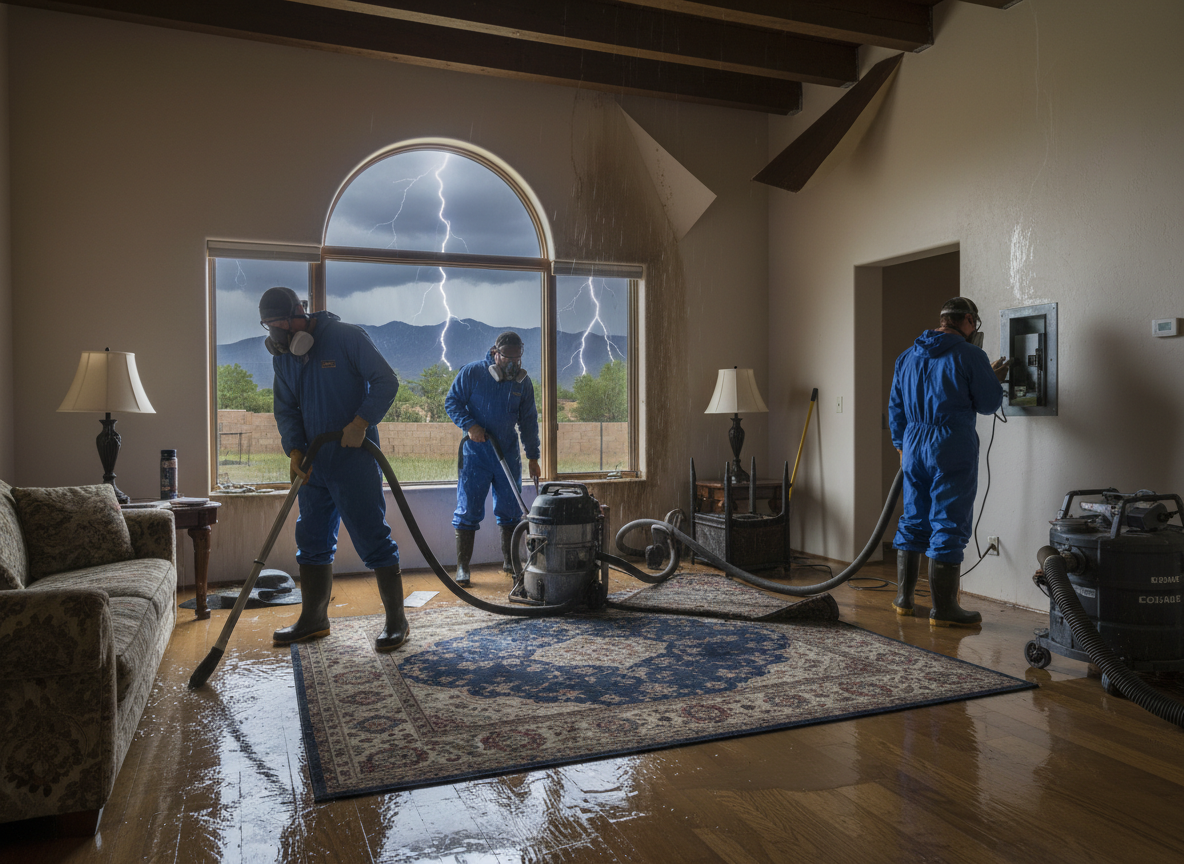
After Albuquerque monsoon storms, shut off power to affected areas, document all damage with photos, and begin extraction within the first 24 hours to prevent mold in high desert conditions. Monsoon rains often hit hardest along the Rio Grande corridor and in South Valley yards where clay soils hold moisture longer than the sandy terrain in Northeast Heights.
Understanding Monsoon Impacts on Local Housing Stock
Albuquerque's high desert climate delivers intense summer downpours that fill arroyos and push water into crawl spaces and basements of homes built before 1970. Properties in Barelas and University Heights frequently see water enter through older adobe or brick foundations that lack modern waterproofing. In contrast, newer builds in North Valley and Los Ranchos handle runoff better but still face issues when Petroglyph National Monument-adjacent slopes channel water toward streets. These patterns mean restoration crews must account for both rapid surface flow and slower groundwater seepage that can linger under slabs for days after skies clear.
Initial Safety and Assessment Steps
Turn off electricity at the breaker before entering any standing water, then check for gas leaks common in older South Valley homes. Walk the property and note water depth in each room, paying special attention to hardwood floors in Nob Hill bungalows that swell quickly. Photograph walls up to the water line and record serial numbers on appliances in University Heights kitchens. This documentation supports insurance claims and guides decisions on whether contents can be salvaged or must be removed before drying begins.
Water Extraction and Drying Techniques
Remove standing water with submersible pumps rated for the volume typical in a 1,200-square-foot Albuquerque ranch, then deploy air movers and dehumidifiers sized for the square footage. In homes near the University of New Mexico, crews often run equipment for 3–5 days because the mild winter humidity combines with monsoon moisture trapped in wall cavities. Focus airflow under cabinets and behind drywall in Uptown condos where tight spaces slow evaporation. Monitor moisture readings daily until levels match the 8–12 percent range common for local lumber.
Mold Prevention Specific to Bernalillo County Conditions
Apply antimicrobial treatments to framing within 48 hours when monsoon water contacts organic materials in Old Town Plaza-adjacent adobes. South Valley properties with poor drainage require extra attention to subfloor cavities where temperatures stay warm enough for spores to grow even after visible water is gone. Homeowners in Taylor Ranch and Four Hills Village benefit from HEPA air scrubbers during the process because dust from the surrounding desert mixes with damp conditions and circulates through HVAC systems.
For detailed pricing factors after storms, review what shapes water damage restoration costs in Albuquerque. Professional water damage restoration teams use moisture meters calibrated for local soil types to confirm every area is dry before reconstruction.
When to Call for Professional Water Damage Repair
Hire specialists if water reaches electrical outlets, affects more than 10 square feet of carpet, or enters HVAC ducts common in Northeast Heights split-level homes. Technicians familiar with Bernalillo County building codes can remove and replace saturated insulation without disturbing original plaster in historic Downtown structures. They also coordinate with Rio Rancho and Los Lunas crews when storms affect multiple nearby cities at once.