2026-11-09 · Roberto Chavez
Protecting Pipes From Freezes in Northeast Heights Homes
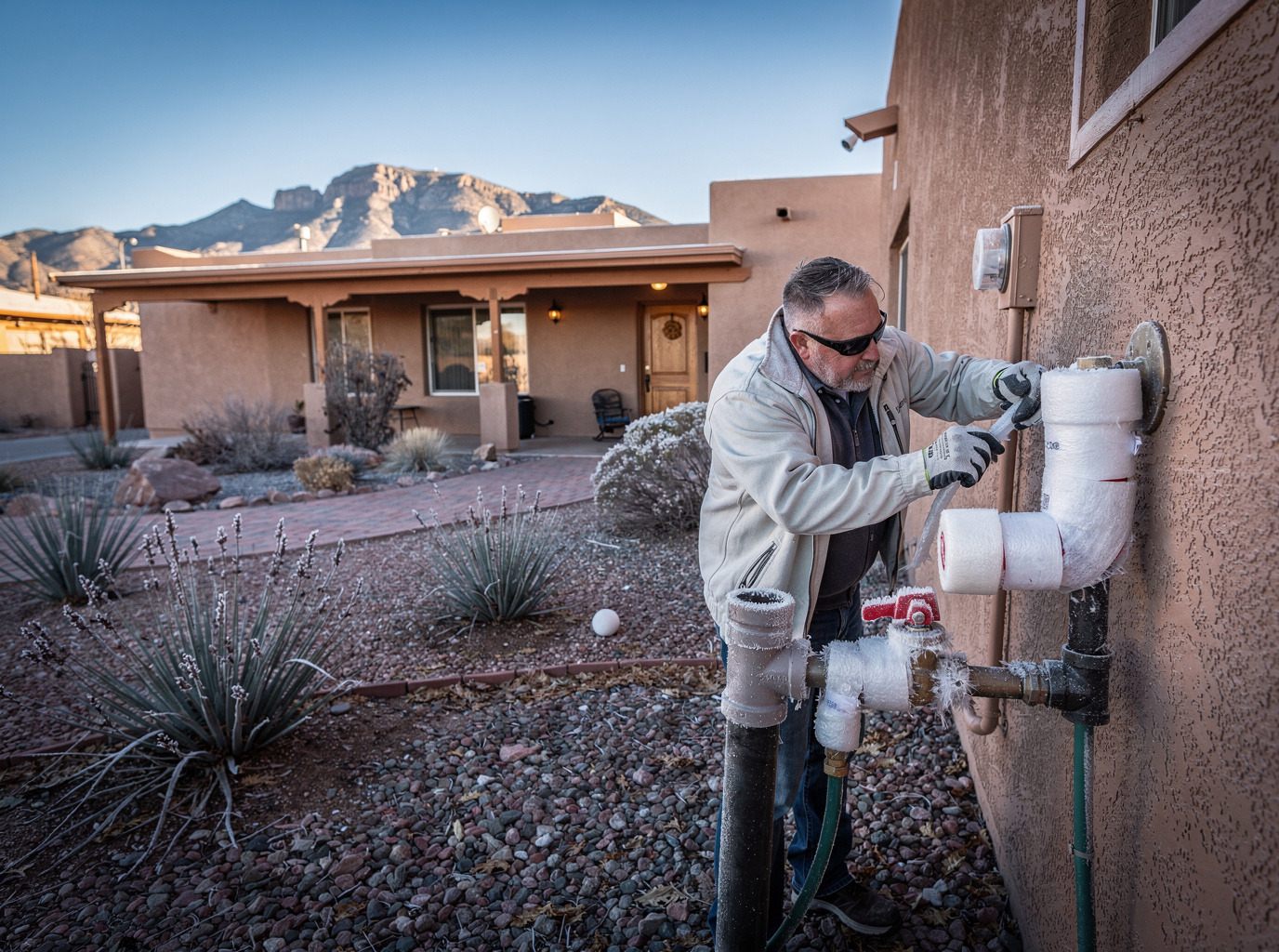
Protecting pipes from freezes in Northeast Heights homes begins with insulating exposed lines in crawl spaces and attics while keeping indoor temperatures above 55 degrees on cold nights. Northeast Heights sits at higher elevation than Downtown or the South Valley, so overnight lows can dip below freezing even when other parts of Bernalillo County stay milder. Homes here often date to the 1950s through 1970s with copper or galvanized lines running through unconditioned spaces near the Sandia foothills.
Why Northeast Heights Homes Face Unique Freeze Challenges
The high desert climate brings mild winters overall, yet clear nights allow rapid heat loss that affects older Northeast Heights construction more than newer builds in North Valley or Los Ranchos. Many homes feature slab-on-grade foundations with supply lines in exterior walls or attic runs near the Petroglyph National Monument side of town. When temperatures drop, these lines lose heat faster than those in denser urban blocks around Old Town Plaza. Homeowners who leave for Santa Fe or Rio Rancho day trips often return to burst pipes if they skip basic precautions. Soil conditions in the area also shift with freeze-thaw cycles, stressing joints where lines enter the home.
Identifying Vulnerable Pipes Before Winter
Walk through the home and check lines in the attic, garage, and under sinks on north-facing walls common in Northeast Heights layouts. Focus on 1/2-inch and 3/4-inch copper runs that lack insulation sleeves, especially where they pass near roof vents or skylights. Note any pipes within 2 feet of exterior doors or windows that face the prevailing winds off the Sandia Peak Tramway corridor. Homes near University Heights or Uptown with finished basements may have laundry lines in exterior walls that freeze first. Mark these locations with tape so you can check them quickly when forecasts call for lows in the low 20s.
Effective Insulation Techniques for Local Homes
Wrap vulnerable pipes with 1/2-inch foam pipe insulation rated for outdoor use, securing seams with foil tape to prevent moisture entry during rare snow events. For attic runs, add R-8 or higher fiberglass wrap around the foam, then seal attic bypasses with expanding foam to reduce convective heat loss. Install heat tape on the most exposed 10–15 feet of line near the water heater closet, setting it to activate at 38 degrees. Leave cabinet doors under sinks open during cold snaps so warm air from the living space reaches pipes. These steps reduce burst risk without altering the home's original plumbing layout.
Monitoring and Maintenance During Cold Snaps
Check the weather each afternoon when forecasts show overnight lows below 30 degrees and run a slow trickle from an indoor faucet farthest from the water heater. Listen for changes in water pressure that signal a forming ice plug. After any freeze event, inspect the water heater closet and laundry area for damp drywall or musty odors that indicate a small leak. If a line does freeze, shut off the main valve at the meter box before applying gentle heat with a hair dryer rather than an open flame. Document the location and extent of any moisture so restoration stays contained.
When Professional Assessment Becomes Necessary
Call for water damage repair if you notice reduced flow after a freeze or see moisture stains on ceilings in multi-story Northeast Heights homes. Technicians familiar with Bernalillo County plumbing can pressure-test lines and locate hidden leaks behind drywall without unnecessary demolition. For larger incidents involving multiple rooms, Water Damage Restoration crews use moisture meters and thermal imaging to map affected areas quickly. Review the factors that shape project scope in the article What Shapes Water Damage Restoration Costs in Albuquerque before scheduling. Address issues promptly to prevent mold growth in the dry but dusty local air.